
In recent years, the demand for rapid UI/UX design tools has surged as businesses, developers, and designers seek ways to streamline app and web development processes. Among the many tools emerging in this space, Uizard has carved out a niche for itself by offering an AI-driven interface design platform aimed at both professionals and non-designers. Its unique selling proposition lies in its ability to convert hand-drawn wireframes into digital mockups almost instantly, allowing users to go from idea to prototype in minutes. In this article, we’ll explore Uizard’s core features, its advantages and limitations, and how it compares to other tools in the same category.
Key Features That Set Uizard Apart
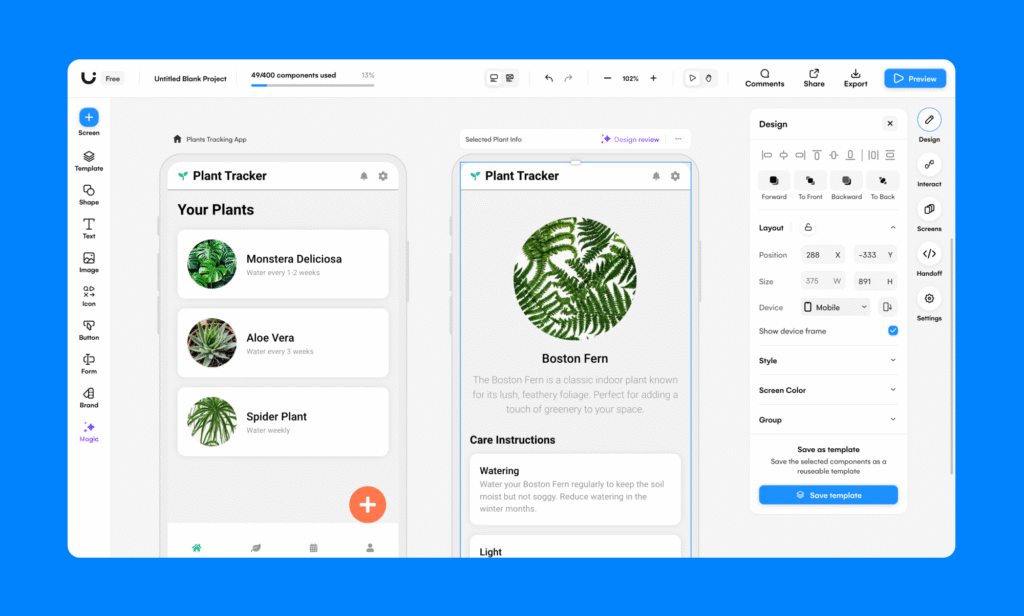
Uizard distinguishes itself from traditional design software with several standout features that emphasize accessibility and speed. One of its most prominent capabilities is the “screenshot-to-design” and “sketch-to-design” function. This allows users to upload images—either of uizard reviews hand-drawn sketches or app screenshots—and the AI will automatically transform them into editable digital designs. This is particularly helpful for non-technical users or stakeholders who may not be familiar with design software but want to contribute ideas during early-stage development.
The tool also includes a variety of pre-built design templates and components, which can be customized with simple drag-and-drop functionality. These templates cover common use cases such as mobile apps, websites, dashboards, and onboarding screens. Uizard’s collaborative features further enhance its usability in team environments, offering real-time collaboration where multiple users can work on the same project simultaneously, making it ideal for remote teams and agile development cycles.
Ease of Use and Learning Curve
One of Uizard’s most praised aspects is its user-friendly interface. Unlike complex software such as Adobe XD or Sketch, Uizard requires minimal learning time. It’s clearly built with accessibility in mind, targeting not just designers but also product managers, marketers, and startup founders who may need to mock up designs without specialized training. The intuitive dashboard, combined with helpful onboarding tutorials and tooltips, makes it easy for beginners to dive into design tasks right away.
Moreover, Uizard offers cloud-based functionality, which means users don’t need to install any heavy software or manage updates. Everything runs within the browser, making it highly accessible across different devices and operating systems. This lightweight, web-based approach helps teams stay agile and productive without being bogged down by traditional software limitations.
Pros and Cons Based on User Feedback
User reviews of Uizard are generally positive, especially among startups and small businesses. On the plus side, the tool is celebrated for its speed, simplicity, and ability to quickly translate concepts into visual prototypes. Many users highlight how useful it is in brainstorming sessions or product pitch meetings where visuals can significantly improve communication.
However, some drawbacks have also been noted. Advanced designers often find Uizard lacking in depth and customization when compared to more robust tools like Figma or Adobe XD. The platform is excellent for wireframing and low- to mid-fidelity designs but can fall short when precision or pixel-perfect design work is needed. Additionally, some users report occasional glitches in the AI interpretation of sketches, particularly when the input images are unclear or contain overlapping elements.
Pricing and Suitability for Different Users
Uizard offers a freemium model, allowing users to explore basic features without cost. The free plan includes access to templates, limited projects, and some AI functionality. For teams and professionals requiring more features—such as team collaboration tools, export options, and advanced AI capabilities—there are paid plans available on a monthly or annual basis. The pricing is competitive when compared to similar tools, making it a viable option for small businesses, educational institutions, and early-stage startups.
For enterprise use or high-end design work, however, Uizard may not fully replace more comprehensive platforms. Instead, it is best viewed as a complementary tool—a fast and accessible option for ideation, wireframing, and early-stage design iteration.
Final Thoughts
Uizard is an innovative design tool that lowers the entry barrier to UI/UX design. With its AI-powered features, intuitive interface, and focus on speed and simplicity, it’s particularly well-suited for non-designers, small teams, and early prototyping phases. While it may not satisfy the needs of seasoned designers working on high-fidelity designs, its ability to rapidly convert ideas into prototypes makes it a valuable addition to any modern digital toolkit. As AI continues to evolve, tools like Uizard hint at a future where the design process becomes more inclusive, efficient, and collaborative than ever before.

Leave a Reply